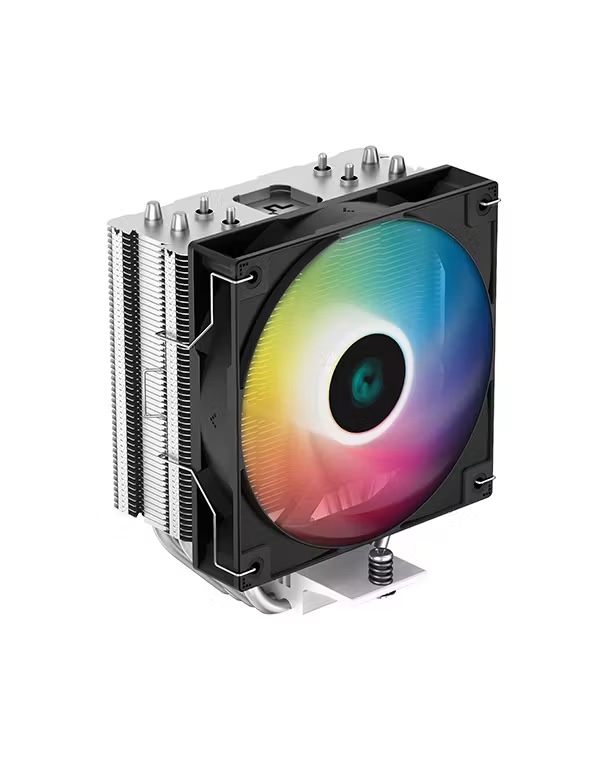
DeepCool AG400 ARGB
Single-tower 120mm air cooler, 150mm tall; our review focuses on the ARGB version used in budget Ryzen 5 and Core i5 builds.
GetPC installed the AG400 in more than 1,000 customer PCs, mainly the ARGB version. Strong value near ₹1,800 for budget Ryzen 5 and Core i5 builds; compare the exact AG400 variant before buying.
Official India stock. Full warranty through the brand's India service network, standard RMA if anything goes wrong.
Full specs
CPUs we commonly paired with it
Where to buy DeepCool AG400 ARGB in India
We regularly sold the AG400 at ₹1,800, where it was excellent value. Retailer results now mix LED, ARGB, Digital, Plus and G2 versions, so compare the full listing name, not only the lowest price.
In my years running a PC store, PrimeABGB (Mumbai) and Vedant Computers (Kolkata) have also been consistently reliable for verified stock - compare before buying.
DeepCool AG400 review: where it works and where it does not
A practical DeepCool AG400 review based on GetPC installation and after-sales experience, with India pricing, CPU suitability, variants and AK400 comparison.
Excellent near ₹1,800, but not for every CPU
The DeepCool AG400 is an easy recommendation for a budget Ryzen 5 or Core i5 build when the required variant is near ₹1,800. Choose it for value and ARGB. Choose the AK400 when cooling performance matters more than lighting.
We installed more than 1,000 AG400 coolers while running the GetPC store. It was dependable in mainstream gaming PCs, but we would not use it for a CPU that regularly needs more than roughly 125W of sustained cooling capacity.
The regular store price where it felt like excellent value.
Mainstream gaming builds with sensible power settings.
The heatsink itself rarely became the problem.
What we learned from installing the AG400
The AG400 was one of the coolers we reached for repeatedly because it solved a common store problem. Customers wanted something visibly better than a small stock cooler, but many did not want to spend enough for a large dual-tower model.
We commonly installed it with Ryzen 5 5500 and 5600X systems, Ryzen 8000-series AM5 builds, and Intel Core i5-12400F or i5-14400F gaming PCs. These were usually balanced builds rather than machines intended for continuous rendering.
The installation count matters because cooler problems do not always appear on a specification sheet. Repeated assembly showed us which mounting mistakes were common, which customers were asking too much from the cooler, and which failures actually returned to the counter.
Which processors should use the AG400?
The AG400 suits a mainstream processor that stays within a reasonable sustained power range. A high advertised cooling number should not be treated as permission to use it on every CPU.
Budget gaming CPUs
Ryzen 5 5500, Ryzen 5 5600X, Core i5-12400F and similar processors are the kind of pairings we used successfully.
Sustained high-power CPUs
We would step up for processors such as the Ryzen 5 7600X or 9600X, unlocked Intel K-series chips, or any workload that regularly pushes beyond roughly 125W.
This is a practical store rule rather than a laboratory limit. CPU power settings, motherboard behaviour, cabinet airflow and room temperature all change the result. The correct question is not whether the system boots. The correct question is whether the cooler remains suitable during the owner's real workload.
Cabinet airflow still matters
A tower cooler cannot compensate for a sealed cabinet with weak intake. Confirm that the front fans can bring in fresh air and the rear or top fans can exhaust heat.
Also check the cabinet's stated CPU-cooler clearance. DeepCool lists the AG400 ARGB at 150mm tall, but the exact specification should be checked for the exact AG400 variant being purchased.
DeepCool AG400 or AK400?
The answer depends on whether the customer values lighting or cooling performance more.
AG400 ARGB
- Best for
- Budget CPUs
- Lighting
- ARGB option
- Our target price
- Near ₹1,800
AK400
- Best for
- More headroom
- Priority
- Cooling, not show
- Cost
- Usually higher
The AK400 performed better in our experience. That does not make the AG400 a bad cooler. It makes them two products for slightly different customers.
What failed, and how DeepCool handled it
We did not see many AG400 failures relative to the number installed. When something did go wrong, it was usually the fan motor or the ARGB lighting rather than the metal heatsink.
The fan can be replaced separately. A lighting failure can also leave the cooling function operational, although the customer may still want a warranty replacement because the product was purchased for its appearance.
Our store policy was to replace a faulty unit immediately when possible instead of making the customer wait. Customers who handled the RMA themselves could send the product to DeepCool, and our experience was that DeepCool India was flexible and sent a replacement quickly.
If the lighting stops, confirm the 5V three-pin ARGB connection and controller settings before treating the cooler as faulty. Never connect a 5V ARGB plug to a 12V four-pin RGB header.
“AG400” can mean several different products
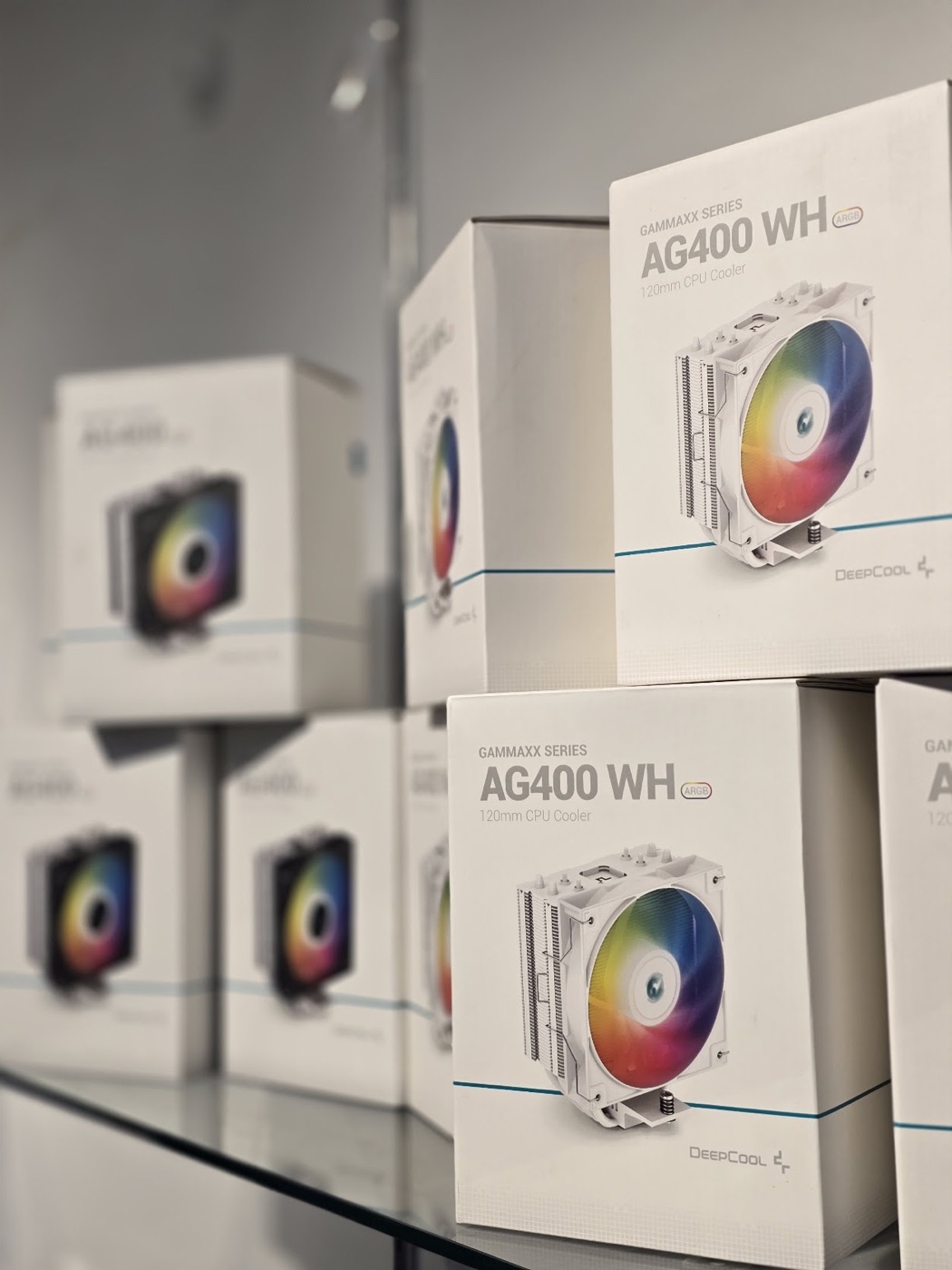
Retail listings now mix standard, LED, ARGB, white, Digital, Plus and G2 versions. Their lighting, fan configuration and price are not identical.
Before ordering, verify:
- the complete product name and suffix;
- whether the lighting is fixed LED or motherboard-controlled ARGB;
- the included fan count and colour;
- socket support printed for that exact unit;
- cabinet cooler-height clearance;
- Indian warranty and GST invoice availability.
Five checks before completing the build
- Confirm that the correct mounting hardware for the CPU socket is present.
- Remove any protective film from the contact surface before applying thermal paste.
- Connect the fan to the CPU_FAN header, not an unrelated system-fan header.
- Connect an ARGB model only to a compatible 5V three-pin header or controller.
- Enter the BIOS after first boot and verify that fan speed and CPU temperature respond normally.
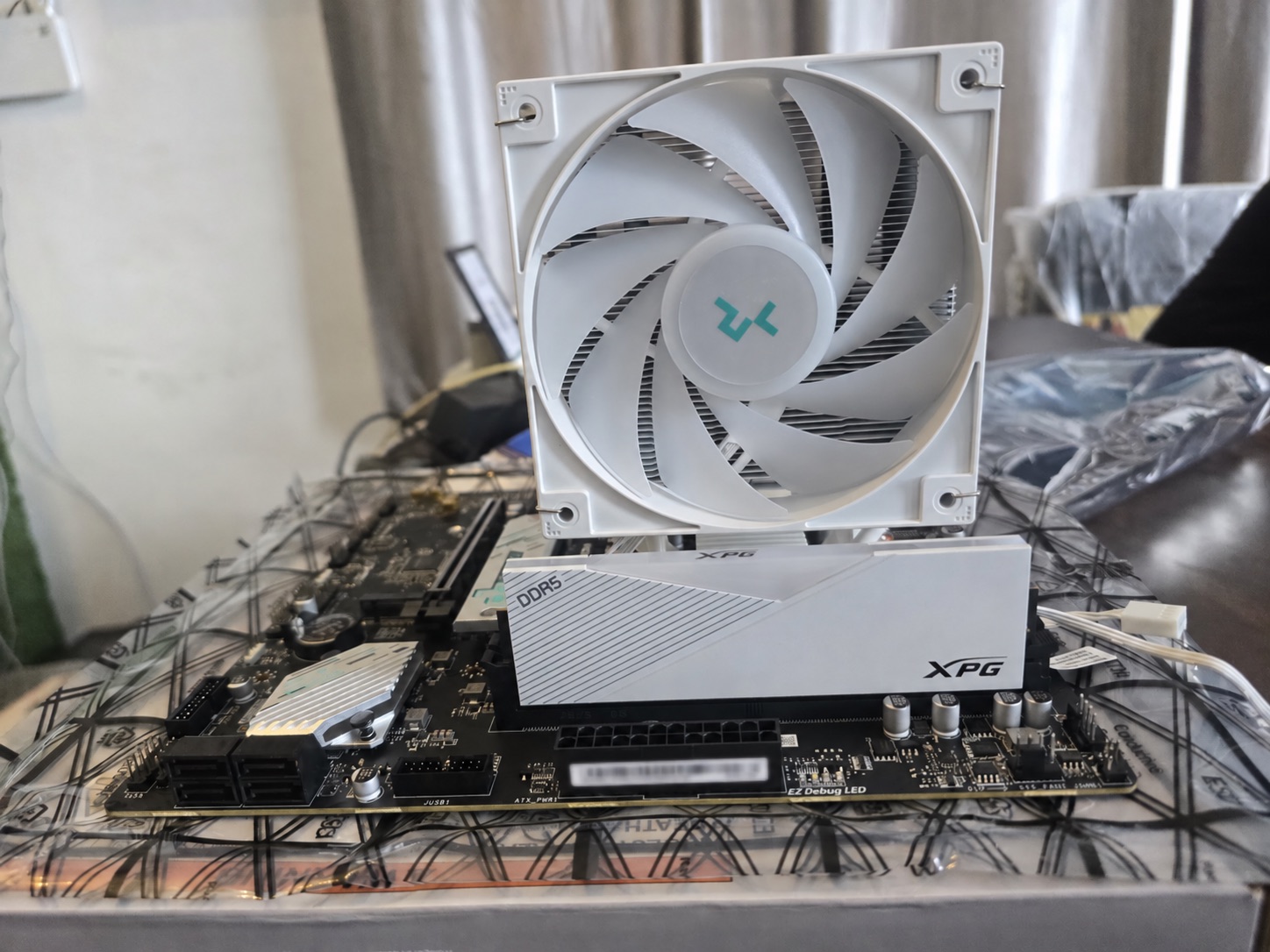
We have not published a temperature chart from these installations. The systems used different processors, cabinets, fan layouts, ambient temperatures and motherboard settings. Combining those readings into one precise-looking chart would create false confidence.
The AG400 is strongest near ₹1,800
₹1,800 was the best regular price at which we sold the AG400. At that level, it delivered the combination of a proper 120mm tower cooler and ARGB appearance that many budget builders wanted.
Our practical buying rule
Always compare the complete variant name. A Digital, Plus or G2 listing should not be mistaken for the price of the basic AG400.
The retailer table on this page tracks current observations. Use it for today's price, then inspect the retailer page for the exact model, stock status, invoice and final checkout amount.
Who should buy the DeepCool AG400?
Value and ARGB matter
- The CPU is a budget Ryzen 5 or Core i5
- The required variant is near ₹1,800
- The cabinet supports a 150mm tower
- You want visible lighting without a large cooler budget
The workload is heavier
- The CPU sustains high package power
- The system performs long production workloads
- The cabinet has restricted airflow
- The AG400 price is close to a stronger cooler
Questions
Yes. We installed it in many AM4 systems, including Ryzen 5 5500 and 5600X builds. It is a sensible pairing when installation and cabinet airflow are correct.
We commonly used it with both processors in mainstream gaming systems. Sustained motherboard power settings and airflow still need to be checked.
Choose the AG400 ARGB for a budget build where lighting matters. Choose the AK400 when cooling performance matters more than lighting.
Yes. The fan is replaceable separately. This is useful because the few faults we encountered were usually related to the fan or ARGB lighting rather than the heatsink.
₹1,800 was the best regular price at which we sold it. Check the exact suffix because AG400 LED, ARGB, Digital, Plus and G2 listings are often mixed together.
No controlled temperature benchmark is claimed. This review uses installation and after-sales experience, not a fabricated average made from unrelated customer systems.