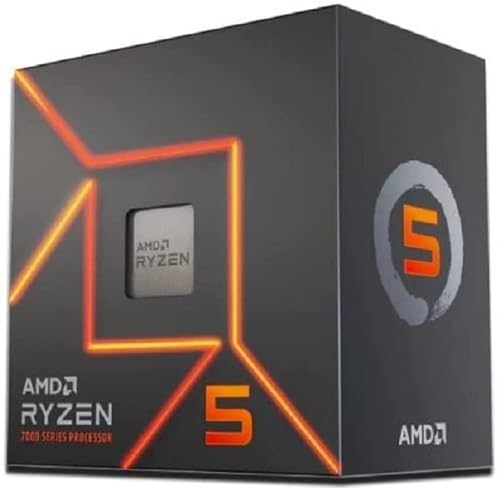
AMD Ryzen 5 7600
6-core Zen 4 gaming CPU on AM5 with an included Wraith Stealth cooler and basic integrated graphics; our value target is around ₹17,000.
GetPC built or sold roughly 50 Ryzen 5 7600 systems. It is a strong budget AM5 gaming choice near ₹17,000; the included Wraith Stealth is usable, while an AG400 is preferable for sustained workloads.
Official India stock. Full warranty through the brand's India service network, standard RMA if anything goes wrong.
Full specs
Motherboards for AMD Ryzen 5 7600
Coolers for 65W+
Where to buy AMD Ryzen 5 7600 in India
We consider roughly ₹17,000 a strong Ryzen 5 7600 price. Above that, compare the Ryzen 5 7600X before paying, especially if an aftermarket cooler is already in your build. Use the live table below for today's retailer prices.
Affiliate links on linked vendors - your price stays the same. PrimeABGB shown for comparison only.
In my years running a PC store, PrimeABGB (Mumbai) and Vedant Computers (Kolkata) have also been consistently reliable for verified stock - compare before buying.
Ryzen 5 7600 review: price, cooler and 7600X comparison
A practical Ryzen 5 7600 review from around 50 GetPC builds, covering India pricing, the stock cooler, AG400 upgrades, B650 boards and RTX 5060 pairing.
A strong budget AM5 CPU when the price is right
The Ryzen 5 7600 is a sensible gaming CPU near ₹17,000, especially when its included cooler prevents another purchase. If the 7600X costs the same or less and you already plan to use a tower cooler, buy the 7600X instead.
We built or sold roughly 50 PCs with the Ryzen 5 7600. It gave us no recurring processor-specific trouble. Its value depends less on the badge and more on the current 7600X price, cooler cost and total AM5 platform budget.
Above this, compare the 7600X before paying.
A balanced AM5 base without overspending on the CPU.
Choose according to workload, noise and budget.
The Ryzen 5 7600 builds we actually sold
Our common configuration was practical rather than extravagant. We paired the processor with an MSI B650M Gaming WiFi or B650M Bomber WiFi motherboard, 16GB of DDR5 memory in price-sensitive builds, and a dedicated graphics card such as the GeForce RTX 5060.
Cooling depended on the customer. The included AMD Wraith Stealth kept the first purchase cheaper. A DeepCool AG400 gave the same system a more comfortable cooling setup when the budget allowed it.
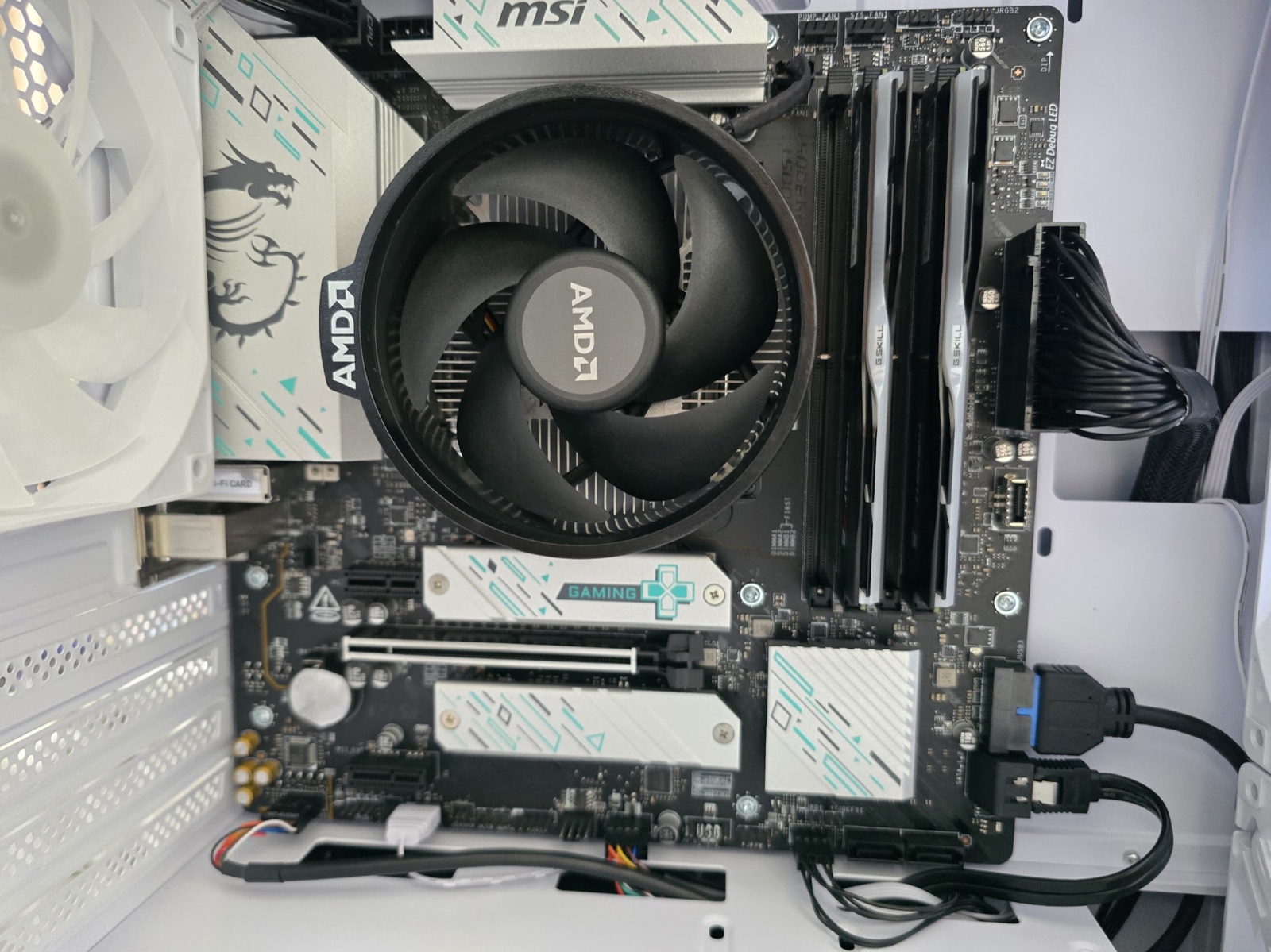
The processor itself did not become a repeat after-sales problem for us. That statement is based on the systems that passed through our store. It does not imply that every AM5 boot or memory issue is caused by the CPU.
Is the Ryzen 5 7600 stock cooler enough?
Yes, it is usable for the right buyer. The Wraith Stealth lets a budget customer finish the build without purchasing a cooler immediately. We used it in gaming-focused systems running at stock settings.
Its limitation is sustained work. It does not perform as well as the AG400, and we would not assume it is the right long-term choice for repeated editing, rendering or another workload that keeps the processor busy for extended periods.
Budget gaming comes first
Use the included cooler when every rupee matters. Test temperatures and noise in the games and applications the owner actually uses.
The workload stays heavy
Use an AG400 or another suitable tower cooler when long editing sessions, rendering, lower noise or sustained performance matter.
Our advice to a customer on a tight budget was simple: start with the stock cooler, monitor the system during real work, and replace it if temperatures or noise make the experience unsuitable. This avoids forcing an extra purchase without pretending the stock cooler is ideal for every use.
Do not copy a temperature from another build and expect the same result. Cabinet airflow, room temperature, fan layout, motherboard behaviour and workload all matter. We have not turned unrelated customer readings into a false benchmark chart.
Ryzen 5 7600 or Ryzen 5 7600X?
Both are six-core, twelve-thread Zen 4 processors. AMD lists a maximum boost of up to 5.1GHz for the 7600 and up to 5.3GHz for the 7600X. The official TDP is 65W for the 7600 and 105W for the 7600X.
The important retail difference is that the Ryzen 5 7600 includes a Wraith Stealth cooler. The 7600X does not include a box cooler.
Ryzen 5 7600
- Cores and threads
- 6 / 12
- Maximum boost
- Up to 5.1GHz
- Official TDP
- 65W
- Box cooler
- Included
Ryzen 5 7600X
- Cores and threads
- 6 / 12
- Maximum boost
- Up to 5.3GHz
- Official TDP
- 105W
- Box cooler
- Not included
The earlier GetPC catalogue showed 88W as the Ryzen 5 7600 TDP. That was not AMD's official TDP and has been corrected to 65W. A TDP figure is not a promise of identical wall power or temperature in every workload, but the official label should still be accurate.
The ₹17,000 buying rule
₹17,000 was our practical value point for the Ryzen 5 7600. At that price, a buyer gets a capable AM5 processor and a usable cooler in the box.
Retail pricing can invert the product stack. The 7600X may temporarily cost less than the non-X chip. A lower model suffix does not guarantee a lower checkout price.
Compare the complete CPU and cooler cost
Use the live retailer table for today's observed price. Confirm stock, the exact boxed processor, GST invoice and final checkout amount on the retailer page.
The 7600 can still be the cheaper build when its CPU listing is slightly higher, because it includes a cooler. That advantage disappears if an AG400 or stronger cooler is already planned. Compare the complete bill, not one number in a search result.
Is the Ryzen 5 7600 good with the RTX 5060?
Yes. This is the sort of balanced mainstream gaming pairing we used the processor for. It gives the graphics card enough room without automatically moving the buyer into a more expensive CPU tier.
That does not mean every gaming build should use the same allocation. Resolution, target frame rate, game type and GPU price all affect the final choice. The useful principle is to avoid spending so much on the processor that the graphics card, monitor, power supply or SSD has to be cut below the buyer's actual needs.
The Ryzen 5 7600 also has basic integrated Radeon graphics. It can provide display output for setup and troubleshooting when no dedicated card is installed. We did not sell it as an iGPU gaming processor. Our normal Ryzen 5 7600 gaming system included a dedicated graphics card.
B650 and DDR5 matter to the total budget
The Ryzen 5 7600 uses the AM5 socket and DDR5 memory. It cannot be installed in an AM4 motherboard and it does not support DDR4.
A premium motherboard is not required simply because the processor is on AM5. We regularly selected practical B650M boards such as the Gaming WiFi and Bomber WiFi models. Spend more only when the added ports, slots, networking, power delivery or upgrade features have a real purpose.
Before ordering the platform, confirm:
- the motherboard uses the AM5 socket and DDR5 memory;
- the chosen case accepts the board size and cooler height;
- the memory kit is suitable for the board and intended profile;
- the power supply has appropriate capacity and connectors for the dedicated GPU;
- the rear and front I/O cover the buyer's actual devices.
Sixteen gigabytes was the budget starting point in many systems we sold. A buyer doing heavier creation work, running several demanding applications or planning longer ownership should consider whether 32GB is the more sensible starting capacity. That decision depends on workload, not just the CPU name.
What to inspect before blaming the processor
AM5 systems can spend longer on an early boot while the board trains memory. If a new build does not behave as expected, avoid immediately concluding that the Ryzen 5 7600 is faulty.
Check the motherboard diagnostic LEDs, power connectors, memory seating, display connection and BIOS version. If a dedicated graphics card is fitted, connect the monitor to that card for normal use. The motherboard output remains useful when isolating a GPU or display problem because the 7600 has integrated graphics.
Once the system reaches the BIOS, confirm that the processor, total memory and storage are detected. Apply memory profiles only after the machine is stable at default settings. Update firmware carefully using the motherboard manufacturer's instructions.
Across the roughly 50 systems in our experience, there was no recurring Ryzen 5 7600-specific failure pattern. That makes normal build diagnosis more important, not less.
Who should buy the Ryzen 5 7600?
You want a balanced AM5 gaming PC
- A dedicated GPU is already planned
- The CPU is near ₹17,000
- The included cooler helps the budget
- You want a capable six-core AM5 base
The full build no longer saves money
- The 7600X costs the same or less
- You are buying a tower cooler anyway
- Long production workloads are the main job
- AM5 cost forces a meaningful GPU compromise
Price we have actually seen
Up 24.0% since we started tracking. Every point is a price our crawler recorded at an Indian retailer - no estimates, no MSRP. Tracking began recently, so the window grows week by week.
Questions
Around ₹17,000 is our practical buying point. Above that, compare the Ryzen 5 7600X and include the cost of the cooler each option requires.
It is usable in a budget gaming build at stock settings. For repeated long editing, rendering, lower noise or more sustained headroom, monitor the real workload and consider an AG400 or another suitable tower cooler.
No. It uses the AM5 platform and requires DDR5 memory.
It has basic integrated Radeon graphics and can produce a display without a dedicated card. For the gaming systems described here, we normally paired it with a dedicated GPU such as the RTX 5060.
Yes. We consider it a sensible mainstream gaming pairing when the total build remains balanced for the target resolution and games.
No recurring processor-specific fault appeared across the roughly 50 systems we built or sold. Motherboard firmware, memory configuration, power, cooling and assembly should still be checked normally.