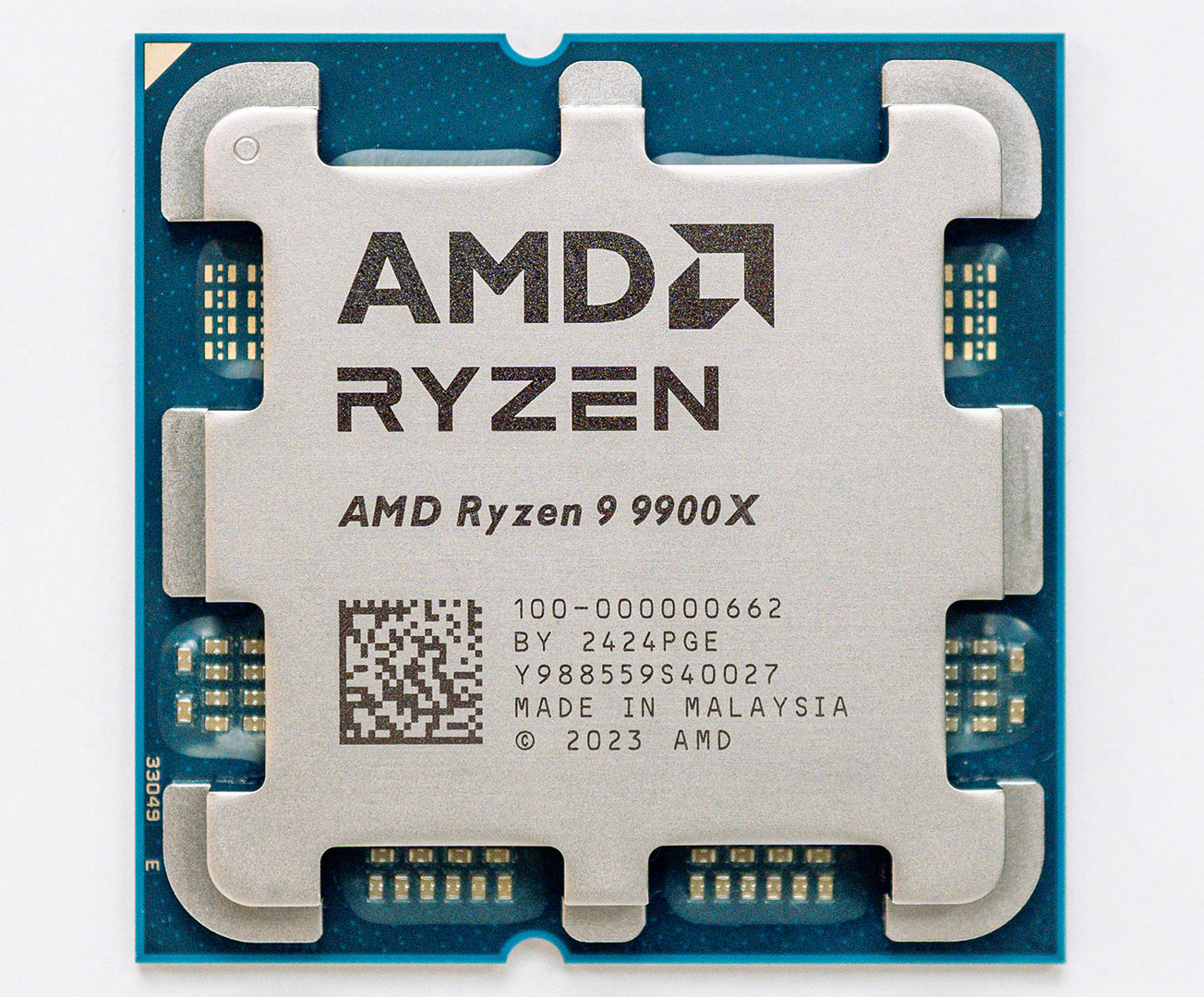
AMD Ryzen 9 9900X
12-core Zen 5 high-end chip on the AM5 platform, with usable integrated graphics.
12-core Zen 5 for mixed workloads. Better than 7900X in every way. Good for creators who also game.
Official India stock. Full warranty through the brand's India service network, standard RMA if anything goes wrong.
Full specs
Motherboards for AMD Ryzen 9 9900X
Coolers for 162W+
Where to buy AMD Ryzen 9 9900X in India
Expect to pay roughly ₹40,300-44,500 for the AMD Ryzen 9 9900X in India right now, depending on offers and seller. I always recommend buying from retailers that give a proper GST invoice - it's what makes your India warranty claim smooth later.
Affiliate links on linked vendors - your price stays the same. PrimeABGB shown for comparison only.
In my years running a PC store, PrimeABGB (Mumbai) and Vedant Computers (Kolkata) have also been consistently reliable for verified stock - compare before buying.
AMD Ryzen 9 9900X - Zen 5's 12-Core Workstation Chip Reviewed for India
The Ryzen 9 9900X occupies an interesting position in AMD's lineup. Zen 5 brought real IPC improvements - 16% over Zen 4 in IPC-sensitive workloads - and the 9900X applies those gains to a 12-core, 24-thread config that's more practical for creative work than the gaming-focused X3D chips. I've watched this chip's India pricing since the Zen 5 desktop launch, and the value case has evolved as prices have settled.
Here's when it makes sense, and when it doesn't.
Performance: Strong Workstation, Decent Gaming
The 9900X's Zen 5 IPC advantage over the 7900X is real and consistent across workloads. In Cinebench R23 multi-thread, it scores roughly 10–14% higher than the 7900X. In single-thread - which drives application responsiveness and game frame rates - the improvement is similar. Hardware Unboxed's Zen 5 coverage showed the 9900X trading blows with the i9-14900K in multi-thread while running at substantially lower power (120W vs 250W+).
For DaVinci Resolve Color grading and Fusion, Blender CPU rendering, and Handbrake encoding, the 12-core 24-thread config does real work. These are the use cases where 12 cores actually stretch their legs versus 8-core alternatives.
Gaming tells a different story. The 9900X is a capable gaming CPU - it won't bottleneck a high-end GPU - but it lacks the 3D V-Cache that makes the Ryzen 7 9800X3D exceptional. In gaming benchmarks, the 9800X3D beats the 9900X by 15–20% on average in CPU-limited scenarios, and the 9800X3D costs ₹30,000–38,000 in India versus ₹32,000–42,000 for the 9900X. That math is uncomfortable for the 9900X if gaming is your primary workload.
The efficiency advantage is real for Indian builds. The i9-14900K's 250W+ power draw under full load is a significant electricity bill concern for heavy workstation users - and that's before the heat management challenge during Indian summers. The 9900X at 120W produces comparable or better multi-thread output with substantially less heat.
India Pricing and Platform Costs
The Ryzen 9 9900X runs ₹32,000–42,000 in India. MDComputers and Vedant Computers stock it, and PrimeABGB typically has it available. Amazon India and Flipkart prices vary more - worth checking MDComputers first for the best consistent pricing.
The AM5 platform requirement is B650 minimum (₹17,000–25,000) or X670 for full PCIe lane allocation (₹28,000–45,000). DDR5 32GB adds ₹7,000–9,000. The full platform spend is significant, but AM5 has longevity - Ryzen 9000 series supports it, and AMD has committed to AM5 through at least the next generation.
An X670E board for the 9900X makes sense if you're using PCIe 5.0 NVMe storage or a PCIe 5.0 GPU - otherwise, a good B650 handles the 9900X at stock fine.
Who Should Buy the Ryzen 9 9900X
This chip is for builders whose workflow involves genuine multi-threaded workstation tasks - video editing in DaVinci Resolve, 3D rendering in Blender or Cinema 4D, scientific computing, or sustained heavy compilation. It's the right pick if gaming is secondary to professional productivity, and you want a chip that handles both without compromise.
Who should skip this: Pure gamers - the 9800X3D beats it in games at a lower or similar price. Content creators who mainly do light editing in Premiere and game - the 9800X3D is still the better balanced chip. And anyone on a tight budget who's stretching into this price range - the 9600X or even 7800X3D offers better value for most real-world use cases.
Price we have actually seen
Down 5.4% since we started tracking. Every point is a price our crawler recorded at an Indian retailer - no estimates, no MSRP. Tracking began recently, so the window grows week by week.
Questions
If gaming is 60%+ of your use case, get the 9800X3D. If multi-threaded workstation tasks dominate, the 9900X's extra cores are worth it. For truly mixed use at 50/50, the 9900X makes more sense due to the 12-core layout helping in sustained render/encode sessions.
At 120W PBO limit, it's manageable with a 240mm AIO or a high-end air cooler like DeepCool AK620. Avoid running the chip without a BIOS power limit if your case has poor airflow - monsoon humidity affects air movement in tightly packed cases.
Yes - Zen 5's IPC and efficiency gains over Zen 4 make the 9900X the better buy at equivalent prices. The 7900X is only worth it if you find it significantly discounted.